Field guide / embodied AI
The robots are arriving.
A Mauritius-based, task-first guide to industrial robots, AMRs, service robots, drones and emerging humanoids, with safety and integration questions before sales claims. We separate a concept, pilot and repeatable production deployment, then link the primary evidence behind changing claims.
Why Robots.mu
Machines are exciting. We stay honest.
Task before machine
Start with the load, motion, environment and exception rate, then shortlist a robot family.
Deployment evidence
Separate a concept, pilot and repeatable production deployment, and ask who measured the result.
Systems, not brochures
Treat tooling, sensing, software, integration and process changes as part of the robot system.
Application safety
Risk assessment belongs to the complete application, including the tool, workpiece, traffic and people nearby.
Interactive
Interrogate the task before the catalogue
The premise
What is Robots.mu?
A robot is a powered mechanism programmed to move within its environment and perform intended tasks, but the right category depends on the application. Industrial robots and robot cells are covered by the ISO 10218 safety family. Driverless industrial trucks, including many AMRs, sit under ISO 3691-4. Service robots and aircraft have different boundaries, so there is no single standard or buying rule for every machine called a robot.
Robots.mu is a Mauritius-based educational field guide. Its explorer uses qualitative selection dimensions instead of invented catalogue averages. The selector provides an orientation, not an engineering recommendation, and the payback tool exposes every user-entered assumption. A real deployment still needs supplier data, a site assessment and application-specific risk assessment.
Questions
Frequently asked questions
What is a humanoid robot?
A humanoid robot has a body form intended to resemble or reproduce aspects of human movement or interaction. Some use legs, while others combine a torso and arms with a wheeled base. Human-like form does not prove general capability, autonomy, safety or readiness for a particular task.
What is embodied AI?
Embodied AI is a broad term for AI systems that perceive and act through a physical body or simulated agent. In robotics it may combine perception, planning and control, but performance still depends on hardware, sensing, training data, environment and the specific task.
Are humanoid robots actually working in real workplaces yet?
Some humanoid systems are being evaluated in workplace pilots, while mature industrial arms and mobile robots already perform defined tasks in many sectors. Evidence for one task or site does not transfer automatically to another. Ask whether the system is a prototype, pilot or repeatable production deployment and who measured its performance.
What does the rise of robots mean for jobs?
Effects on work depend on the task, sector, process redesign and local conditions. A useful assessment maps which activities could change, what supervision and maintenance remain, and how people will be trained or redeployed. A robot purchase alone cannot predict job outcomes.
How can I tell robot hype from reality?
Ask whether the machine is a concept, pilot or supported product; whether a person is teleoperating it; what task, environment and success measure were used; how often humans intervene; and whether evidence comes from the manufacturer or an independent operator. Repeatable results matter more than one edited demonstration.
Dispatches
From the blog
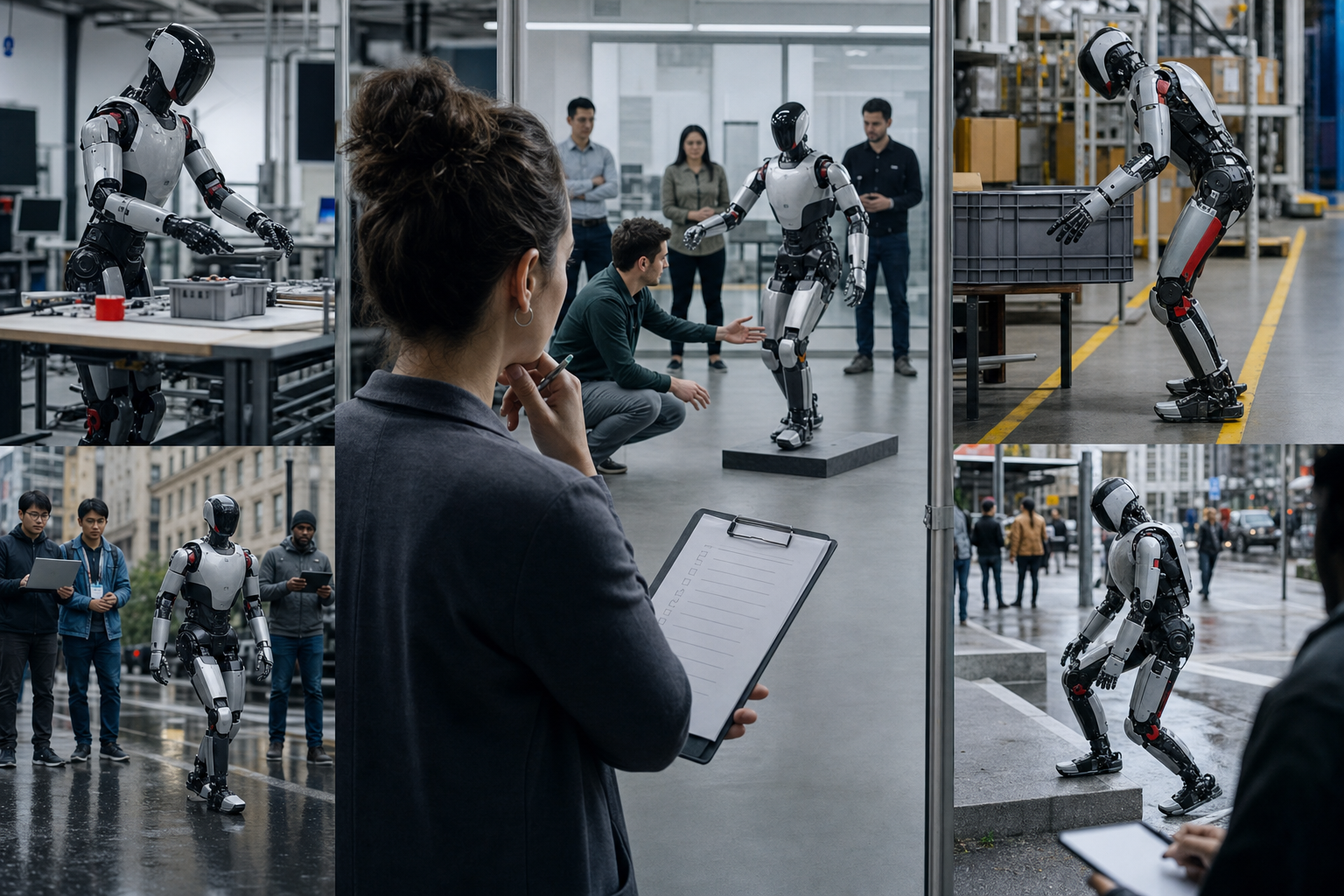
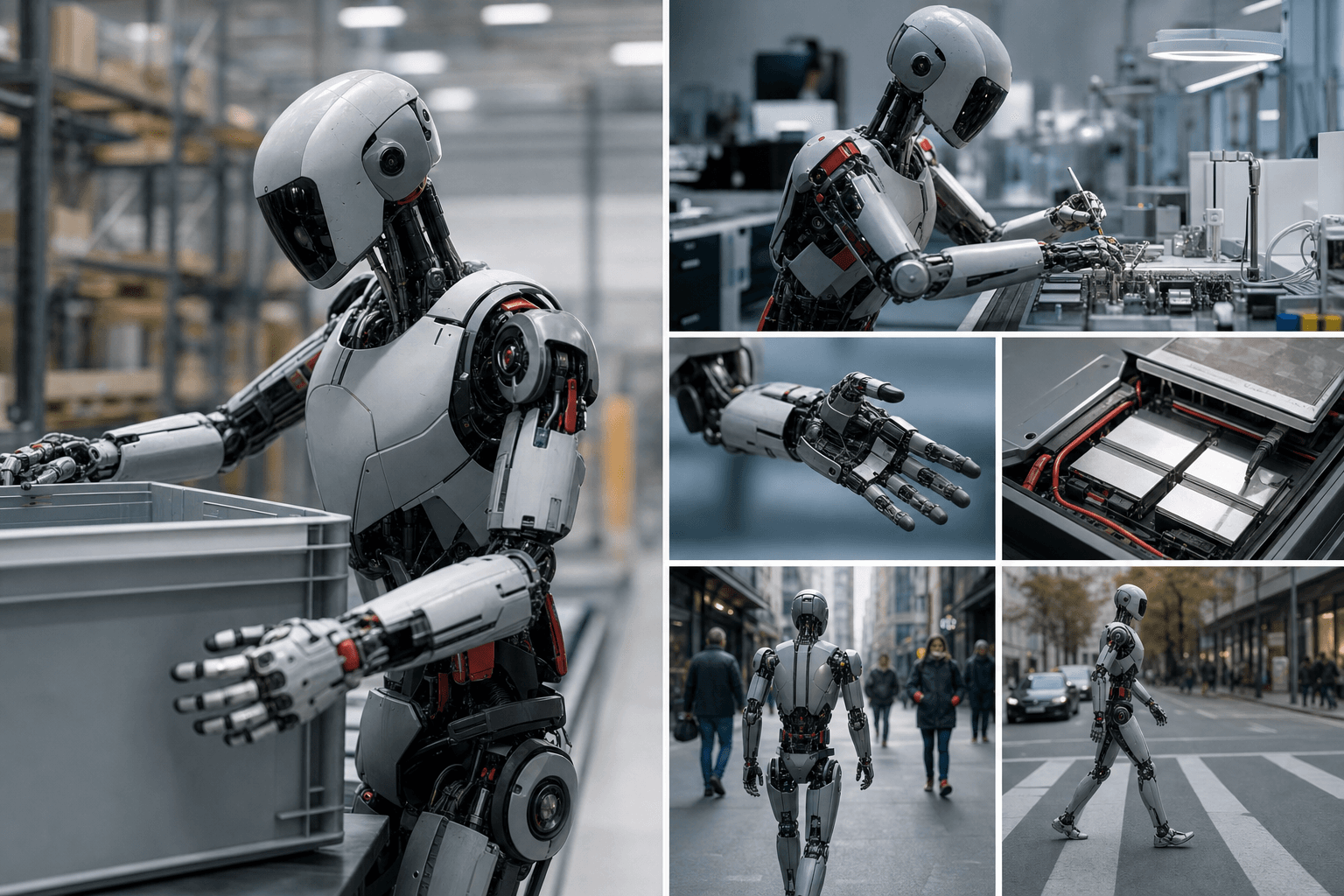
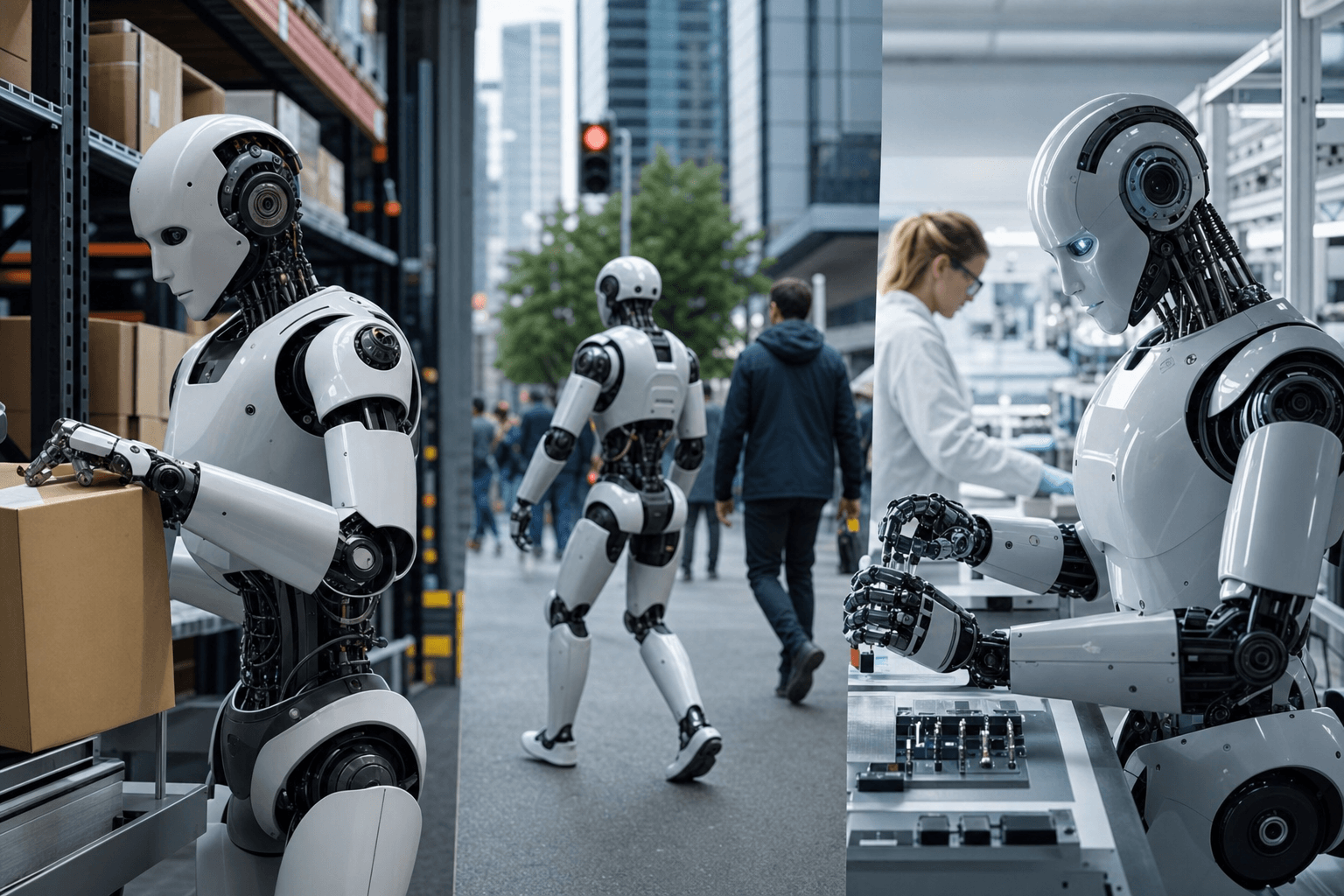
Robotics decisions begin with a measurable task.
Robots.mu is part of the Nexus AI ecosystem.
Discover Nexus