How to Evaluate a Humanoid Robot Demo Without Getting Fooled
5 July 2026 · By Robots.mu
Why humanoid demos are so persuasive
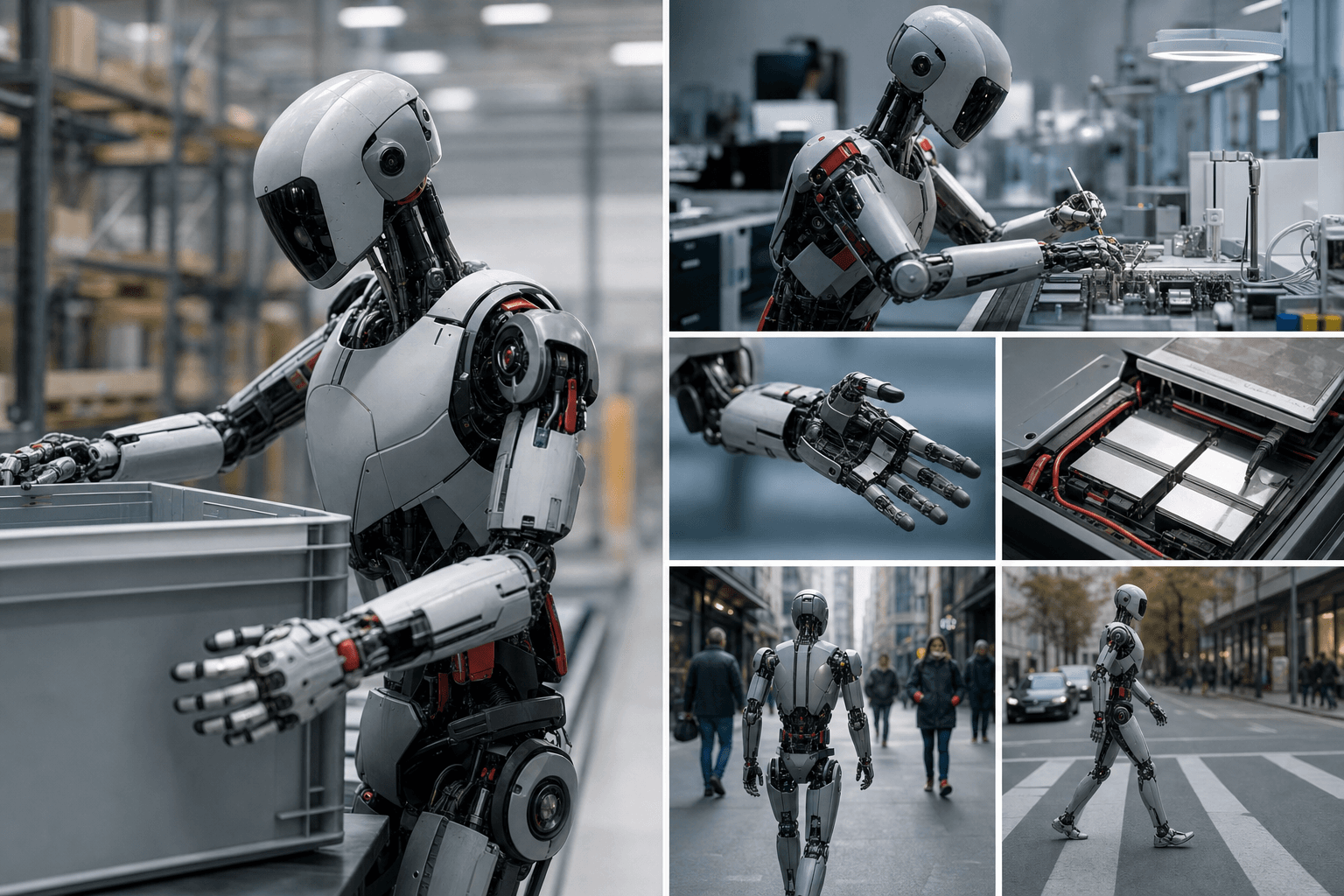
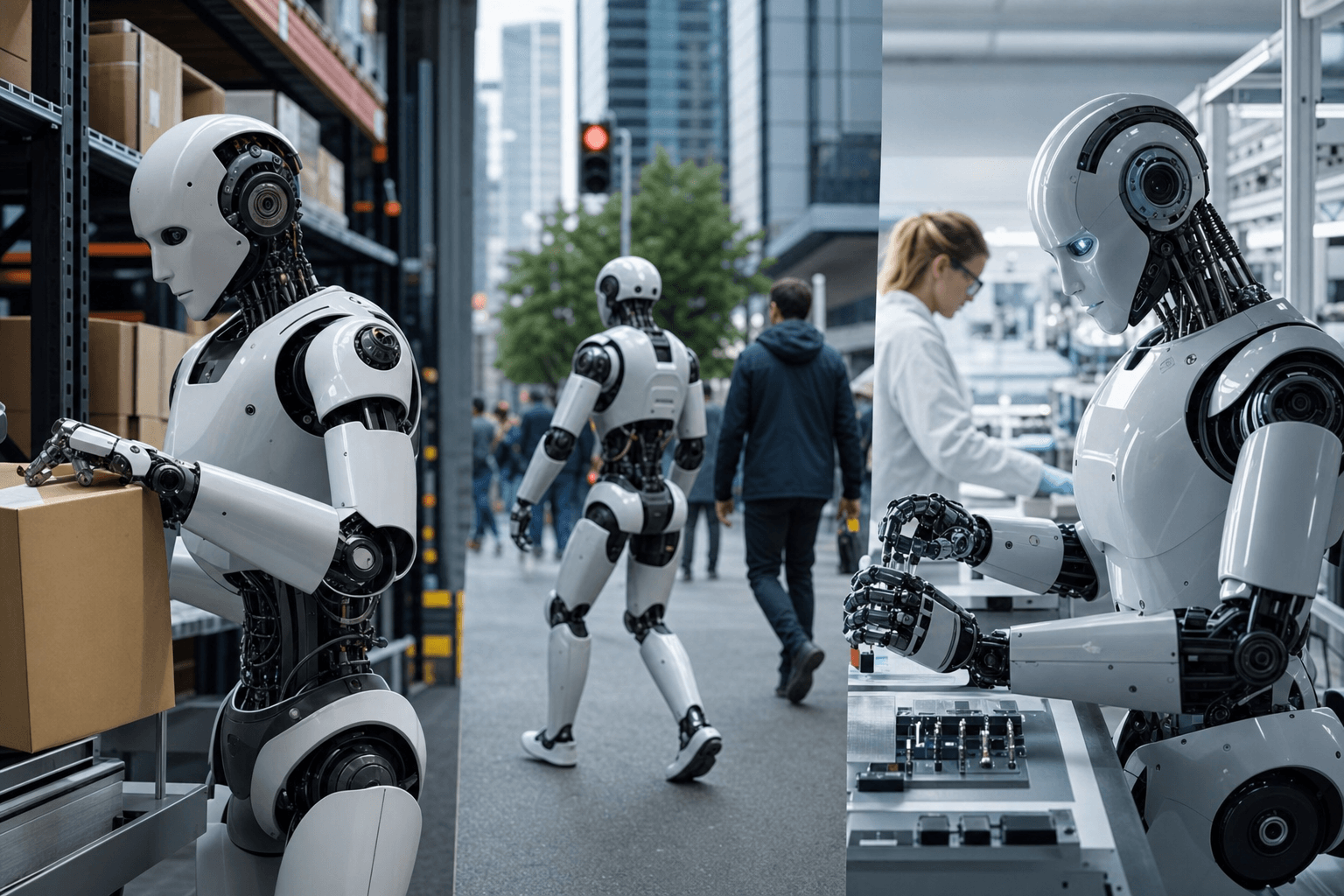
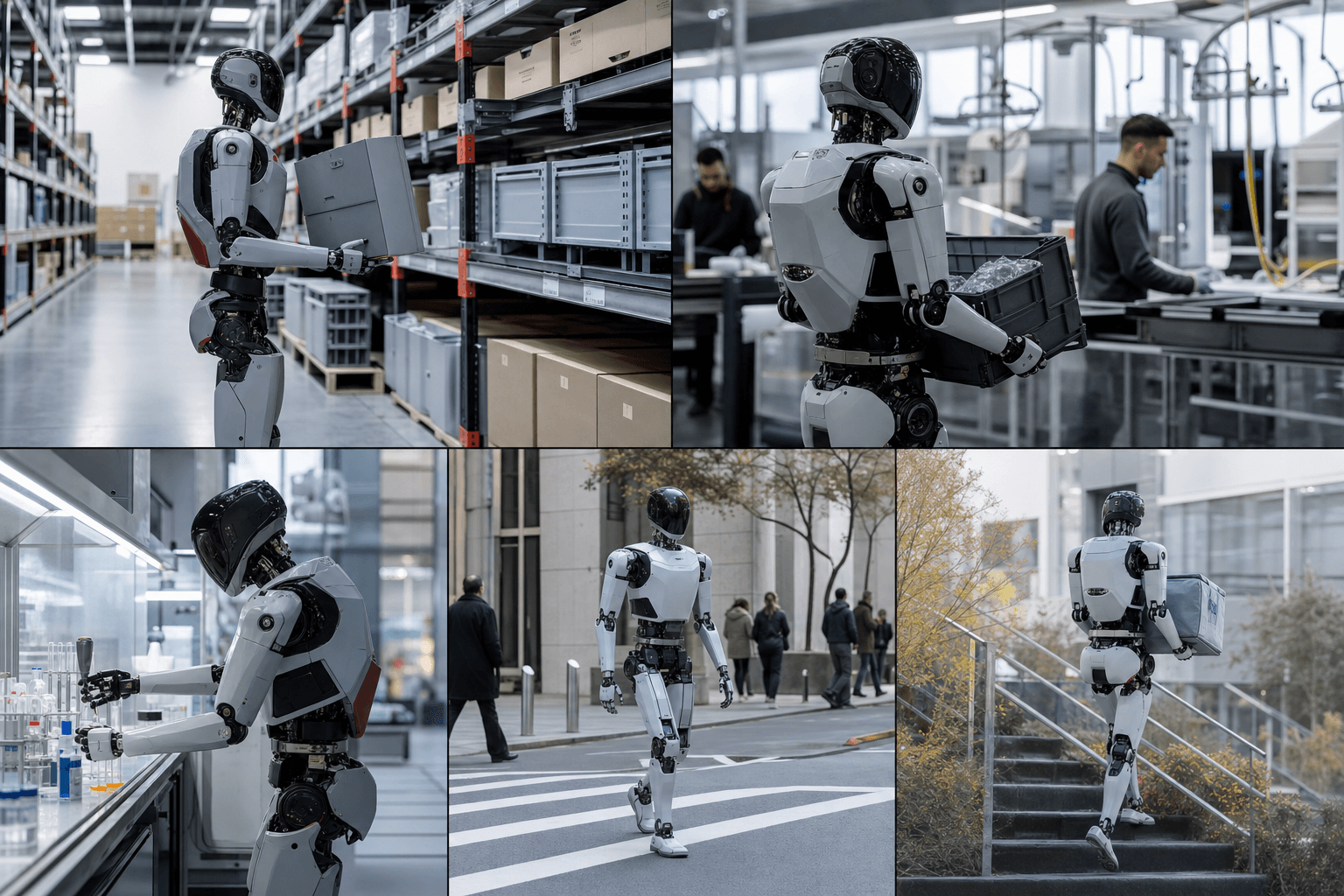
Humanoid robot demos are designed to be impressive. That is not a flaw, it is part of the product. A robot that walks, grasps, balances, and interacts in human spaces has to look coordinated to earn trust. The problem is that a polished demo can hide a great deal about what the machine can actually do in the real world.
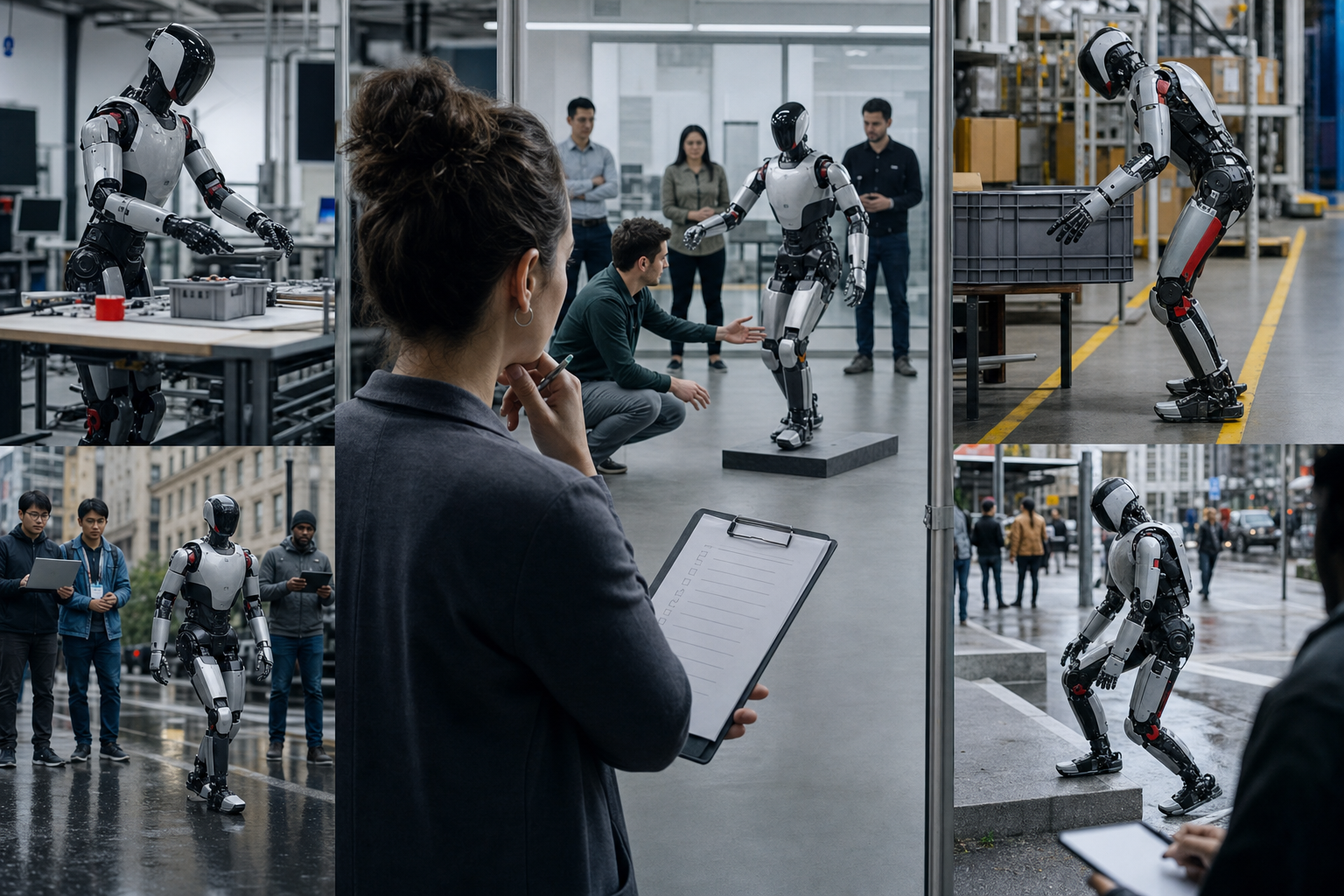
For buyers, investors, operators, and curious observers, the challenge is simple, how do you tell the difference between a controlled showcase and a system that is ready for repeated use? The answer is not to become cynical. It is to ask better questions.
In robotics, capability is usually revealed by repetition, variation, and failure handling. A system that succeeds once on a prepared stage may still be far from useful. A system that works across shifts, across operators, and across slightly messy environments is much closer to something real.
Start with the task, not the pose
The first question is not whether the robot can walk, wave, or squat. It is whether it can complete a useful task end to end.
A strong demo has a clear job definition. For example, can the robot pick an object from one bin and place it into another without human intervention? Can it open a door, navigate a hallway, and deliver an item? Can it perform the same sequence 20 times in a row without a reset?
Look for these clues:
- The task has a measurable start and finish.
- Success is not defined by a single moment, but by a full cycle.
- The robot handles the ordinary version of the task, not only a specially prepared one.
If a demo focuses mostly on mobility, ask whether locomotion is the product or just the camera-friendly part. If it focuses on dexterous manipulation, ask how much environmental control was required. In many cases, the most important work is hidden in the setup.
Ask what was scripted
A surprising number of demos mix real autonomy with carefully staged support. That does not mean they are fake. It means you need to understand which parts are autonomous and which parts were prearranged.
A useful checklist:
- Did a human teleoperate any part of the sequence?
- Were the target objects placed in fixed positions?
- Was the route pre-mapped or manually corrected?
- Did the robot receive a scripted prompt, motion plan, or task queue?
- Was the environment modified to reduce uncertainty?
Robotics systems often combine perception, planning, and human assistance. That is normal. The issue is when a demo implies full autonomy where the actual system depends heavily on hidden support.
A simple rule helps here, the more the environment is cleaned up, labeled, or constrained, the less evidence the demo provides about general-purpose capability.
Repeatability matters more than one great run
One successful run proves the robot can succeed. It does not prove the robot is dependable.
Ask for repeatability metrics. If the team will not share them, that itself tells you something. Useful numbers include:
- Success rate over many trials.
- Average time to complete the task.
- Number of resets or human interventions.
- Failure modes, especially the most common ones.
- Performance under small changes in object position, lighting, clutter, or floor condition.
The most revealing demos are often the boring ones. A robot that completes a task slightly slower but with high consistency is usually more valuable than one that looks dramatic and fails unpredictably.
For humanoids, repeatability is especially important because the system is mechanically complex. Balance, perception, grasping, and control all interact. A small error in any one area can cascade into a fall, a dropped object, or a stalled sequence.
Distinguish capability from tolerance
Some demos show a robot doing a task in a way that looks impressive, but actually depends on a forgiving setup. Maybe the object is easy to grasp, the floor is perfectly flat, or the lighting is tuned for the robot’s sensors.
That is not useless, but it is important to distinguish capability from tolerance.
Capability means the robot can solve the task because its software and hardware are robust. Tolerance means the task is easy enough, or controlled enough, that the robot can get by.
When you watch a demo, ask:
- How sensitive is success to object shape, size, or placement?
- Does the robot need special markers, fiducials, or tags?
- Does the environment require clean floors, fixed furniture, or uncluttered paths?
- Is the robot making robust decisions, or just following a narrow script?
This matters because commercial environments are rarely perfect. Warehouses change. Homes are messy. Hospitals have people, carts, reflections, and interruptions. The more the demo depends on ideal conditions, the less predictive it is of field performance.
Pay attention to safety and recovery
A practical robot is not only one that can act, it is one that can fail safely.
In a real deployment, failure is guaranteed. The question is whether the robot can recover without causing damage, delays, or risk to people nearby.
Look for evidence of:
- Emergency stop behavior.
- Collision detection.
- Safe speed limits near humans.
- Recovery from grasp failures or navigation errors.
- Graceful fallback when perception is uncertain.
If a robot freezes or needs a full manual reset after every error, that is a serious operational cost. If it can detect its own uncertainty and hand control back to a human, that is a sign of maturity.
This is particularly important for humanoids because they share workspaces with people. The closer the robot gets to humans, the more important it becomes to ask not just, “Can it do the task?” but, “What happens when it gets the task wrong?”
Check whether the demo reflects economics
A robot can be technically impressive and still be a poor business choice.
That is why the best evaluators connect demo performance to operating economics. Ask whether the robot’s behavior reduces labor, increases throughput, or improves consistency enough to justify its cost.
Useful questions include:
- How many human labor minutes does the robot replace or augment?
- How much supervision is required per hour of operation?
- What is the maintenance burden, including charging, calibration, and part replacement?
- How many hours per day can the robot realistically run?
- What environment changes are needed before deployment?
A demo that takes a team of engineers, a custom space, and hours of tuning to achieve one great sequence may still be a long way from viable operations. In robotics, the distance between “works in the lab” and “works on the floor” is often measured in support time.
Use the right skepticism
Healthy skepticism is not a dismissal of progress. Robotics is genuinely improving. Models are becoming more capable, sensors are getting better, and manipulation stacks are more flexible than they were a few years ago.
Still, a demo should be treated as evidence of a specific capability under specific conditions. That is the honest baseline.
Here is a practical way to interpret what you see:
- If the robot performs one task once, that is a proof of possibility.
- If it performs the task many times, that is a proof of consistency.
- If it performs across changing conditions, that is a proof of robustness.
- If it does so safely and economically, that is a proof of usefulness.
Most demos only reach the first step. That is fine, as long as nobody confuses possibility with readiness.
A practical takeaway for buyers and observers
The next time you watch a humanoid robot demo, use this short test.
Ask what task is being solved, what the robot does on its own, how many times it has been repeated, what changes break it, how it recovers from mistakes, and what the deployment economics look like.
If a company can answer those questions clearly, with numbers, failure cases, and limits, you are likely looking at a serious robotics team. If the answers are vague, the demo is probably more marketing than product.
That does not mean you should ignore the excitement. It means you should channel it into better judgment. The most useful humanoid robots will not be the ones that impress most in a short video. They will be the ones that keep working when the lights are different, the objects move, the floor is cluttered, and nobody is there to help.
Robotics decisions begin with a measurable task. Explore the wider Nexus AI ecosystem.