Every few months a new video promises a robot that will fold your laundry, cook your dinner, and tidy the living room. The clips are dazzling. The products, when they exist at all, are not. Meanwhile the most successful home robot in history remains a disc that vacuums the floor. Understanding that gap is the key to thinking clearly about domestic robotics.
The reality: what you can actually buy
The honest list of home robots that work today is short but genuinely useful:
- Robot vacuums and mops, now with good navigation, self emptying docks, and app control. This category is mature, competitive, and worth buying.
- Robotic lawn mowers, increasingly wire free and camera guided.
- Pool cleaning robots, a quiet success in any country with a pool culture, Mauritius included.
- Window cleaning robots and litter box robots, niche but functional.
Notice the pattern. Every successful home robot does one task, on one surface type, with a failure mode that is annoying rather than dangerous. A vacuum that misses a corner is a shrug. A robot arm that drops a pot of hot rice is a lawsuit.
Why your house is robotics on hard mode
It sounds backwards, but a home is a far harder environment than a factory. Factories are engineered for machines: flat floors, fixed lighting, known objects, trained workers. A home is the opposite. Every house is different. Objects move daily. Lighting changes with the weather. Floors mix tile, rug, and that one step down into the veranda. Children and pets behave unpredictably. And the robot must be safe around all of it, unsupervised, forever.
Add the economics. A factory robot replaces paid labour, so a high price can be justified on payback. A home robot replaces your own unpaid time, which caps what most households will spend. Building a machine that handles open ended domestic chaos, safely, at an appliance price, is one of the hardest problems in all of robotics.
Reading the humanoid home demos
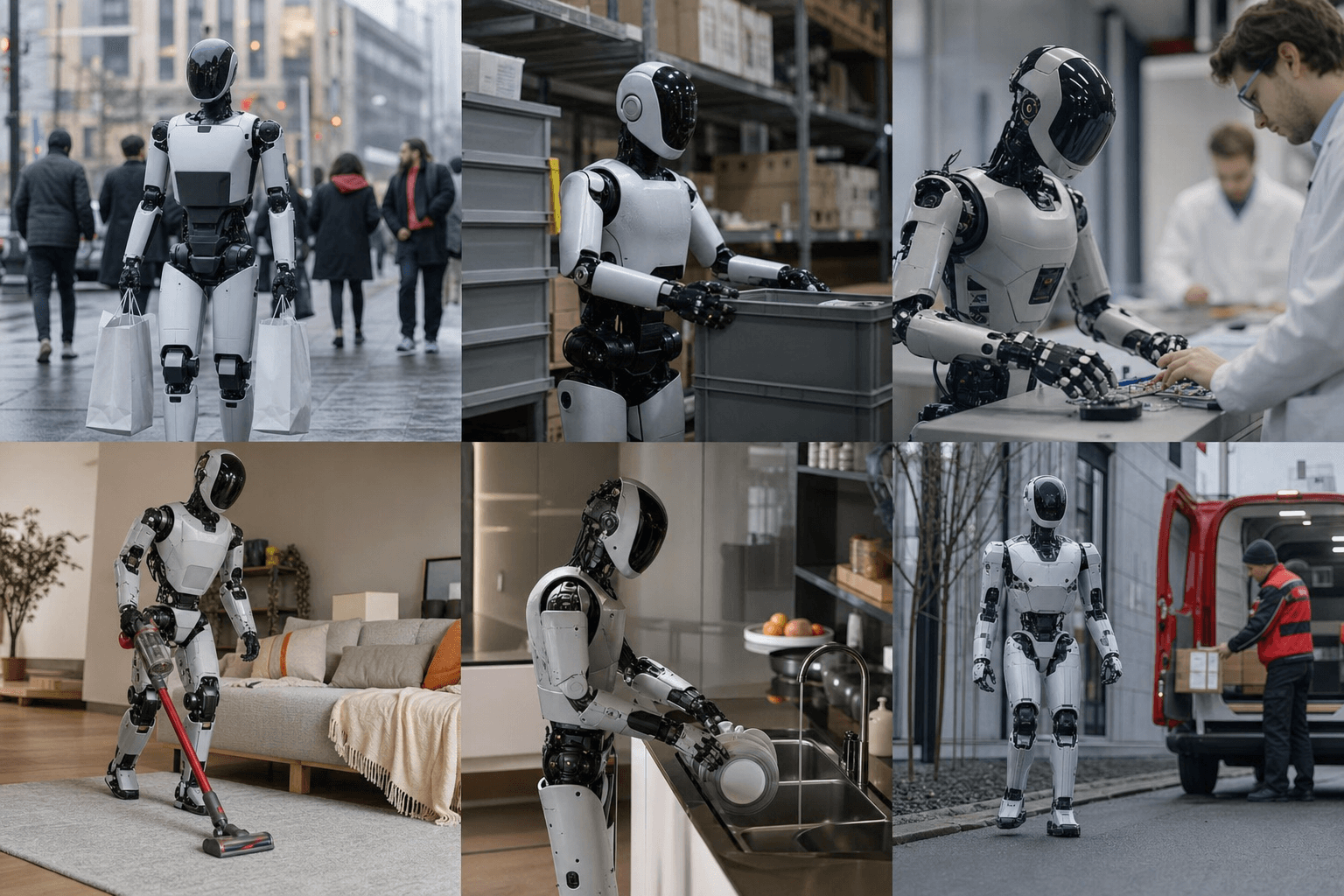
Several humanoid companies now show their machines loading dishwashers and folding shirts. Apply the standard filters. Many such demos are teleoperated, meaning a human somewhere is driving the robot. Others are autonomous but filmed in a staged kitchen the robot has been trained in extensively. Autonomy in an unfamiliar home, with your specific cupboard layout and your specific clutter, is a different problem entirely.
There is also a privacy question that deserves more attention than it gets. A capable home robot is a mobile platform of cameras and microphones that maps your house. Before the robot butler era arrives, buyers should be asking where that data goes, and early reporting on teleoperated products suggests remote human operators sometimes see inside customers' homes.
A practical buying framework
For households in Mauritius or anywhere else, a simple rule serves well: buy robots for tasks, not robots for promises.
- If a device does one chore you genuinely dislike, and reviews confirm it works, it is a fair purchase. Floor cleaning in a dusty, sandy coastal climate is a strong example.
- Check spare parts and local repair options. Humid, salty air is hard on electronics, and an appliance you cannot service is disposable.
- Treat any preorder for a multipurpose home robot as speculation, not shopping.
- Assume subscription fees. Increasingly the hardware is the entry ticket and the software is the recurring cost.
When does the real home robot arrive
The honest answer is that nobody knows, but the path is visible. Costs are falling, learned manipulation is improving, and companies now have commercial reasons to attack laundry and kitchens. A reasonable guess is that the first credible general home robots appear as premium products for wealthy early adopters and for elder care, where the value of assistance is highest, before trickling down over many years, the way dishwashers and air conditioners did.
Until then, keep enjoying the demos, and keep your skepticism charged along with your vacuum. The robots are arriving, but they are coming through the warehouse door long before they knock on yours.
Robotics decisions begin with a measurable task. Explore the wider Nexus AI ecosystem.