Robots in Logistics Today: What Actually Works on the Warehouse Floor
11 June 2026 · By Robots.mu · Updated 5 July 2026
Ask where robots already do serious economic work, and the answer is not a humanoid demo. It is the warehouse. Logistics is the quiet success story of modern robotics: unglamorous machines, running long shifts, measured on throughput rather than applause. If you want to know what the robot economy really looks like today, start here.
The workhorses that are already deployed
A modern automated fulfilment operation typically combines several proven categories:
- Goods to person systems. Fleets of squat mobile robots carry shelves or totes to a stationary human picker. The person stays put, the inventory travels. This is the architecture that transformed e-commerce fulfilment, and it works because it removes walking, which historically consumed most of a picker's day.
- Autonomous mobile robots, or AMRs. These navigate shared floors using cameras and lidar, hauling carts between zones without magnetic tape or fixed rails. They tolerate messy, changing layouts far better than older automated guided vehicles.
- Robotic sortation. Arms and tilt tray systems that scan parcels and route them to the right chute, running at speeds humans cannot sustain.
- Palletising and depalletising arms. Stacking boxes is repetitive, heavy, and injury prone, which makes it ideal robot work.
None of these machines look futuristic. All of them are bought in volume because the payback maths works.
What is still genuinely hard
The honest frontier in logistics is picking: reaching into a jumbled bin and grasping one arbitrary item. Humans do this without thinking. Robots struggle with deformable packaging, transparent plastic, tangled items, and the sheer variety of products a general retailer stocks. Vision systems and learned grasping have improved enormously, and robotic piece picking is now in production at some sites, but it usually handles a subset of items while humans cover the exceptions.
Trailer unloading is another stubborn problem. Boxes arrive stacked floor to ceiling in random patterns, in a hot metal container. Purpose built unloading robots exist and are improving, and this is exactly the kind of job humanoid makers are targeting too.
The unglamorous blocker across all of it is exception handling. A robot that works 95 percent of the time still generates constant interruptions at scale. The winners in this industry are the companies that obsess over the last few percent.
Why humanoids are circling this market
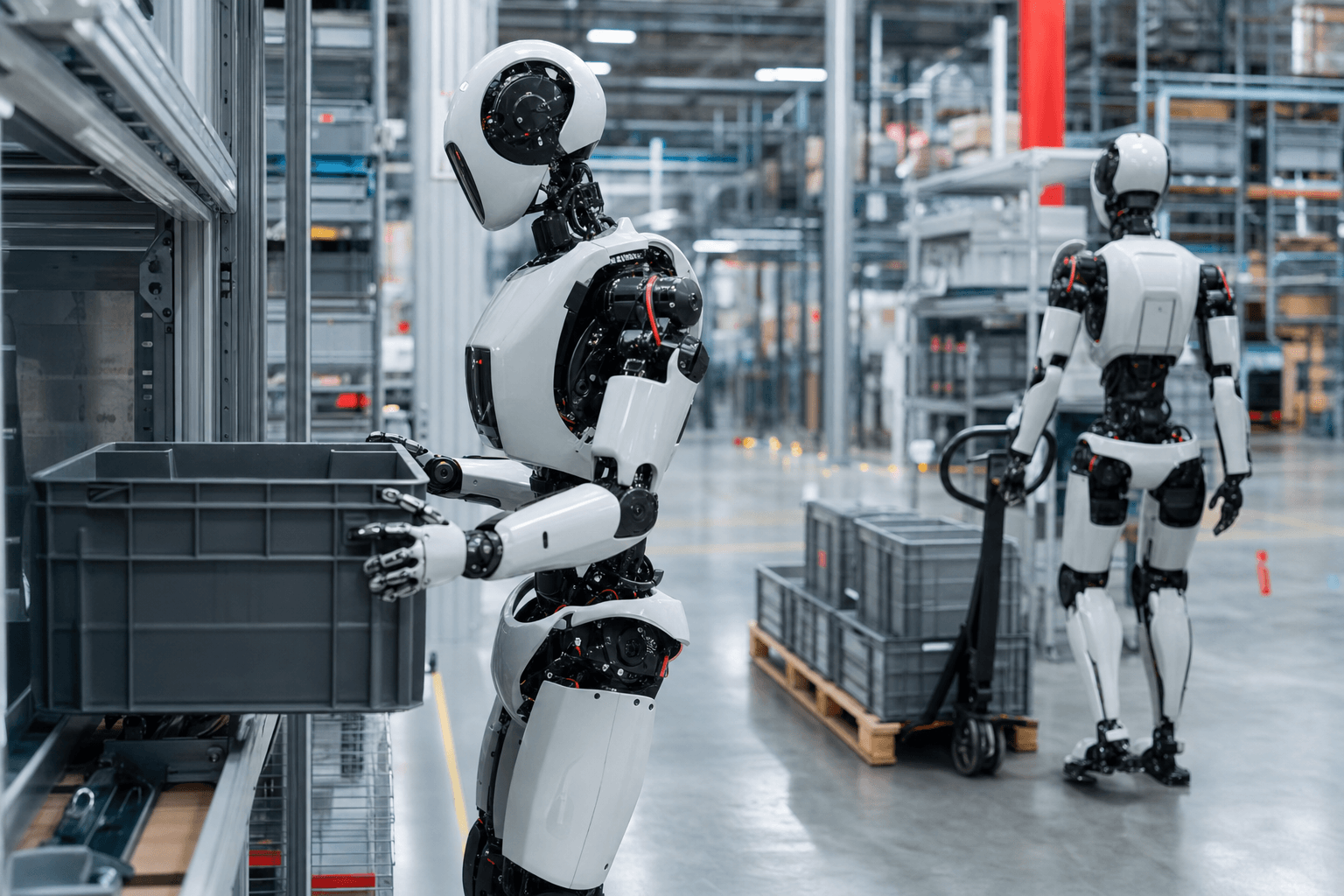
Warehouse work is the beachhead almost every humanoid company has chosen, and the logic is sound. The environment is indoors, structured, and privately controlled, so safety rules are manageable. Tasks repeat. Labour turnover in warehousing is notoriously high, so operators are receptive. The open question is whether a general purpose biped can beat a cheaper wheeled robot with an arm at these specific jobs. For tote moving, probably not. For jobs involving stairs, trailers, and human height shelving, the humanoid case gets stronger.
The view from Mauritius
Mauritius lives and dies by logistics. Nearly everything on a shop shelf arrived by sea, moved through the port, and passed through warehouses around the island. Local operations are mostly too small for the giant automated systems used by global e-commerce players, but that is changing in two ways.
First, robotics is moving down market. AMRs can now be rented under robotics as a service arrangements rather than bought outright, which suits smaller facilities with seasonal peaks, such as those serving the year end retail rush. Second, the skills involved, fleet management software, warehouse management integration, and maintenance, are learnable here and exportable to the region. East Africa's logistics sector is growing fast, and a Mauritian firm that masters warehouse automation support has a natural market next door.
How to read this sector
Ignore the flashiest videos and watch three signals instead: the number of robots a vendor has in sustained daily operation, whether customers expand after their first site, and whether the robots run without a dedicated attendant. Logistics robotics is a business of uptime, integration, and boring reliability. That is precisely why it is the part of the robot economy that is already real, and why it is the proving ground everything else, humanoids included, must pass through.
Robotics decisions begin with a measurable task. Explore the wider Nexus AI ecosystem.