The Humanoid Moment: Why General Purpose Robots Suddenly Feel Inevitable
10 June 2026 · By Robots.mu · Updated 5 July 2026
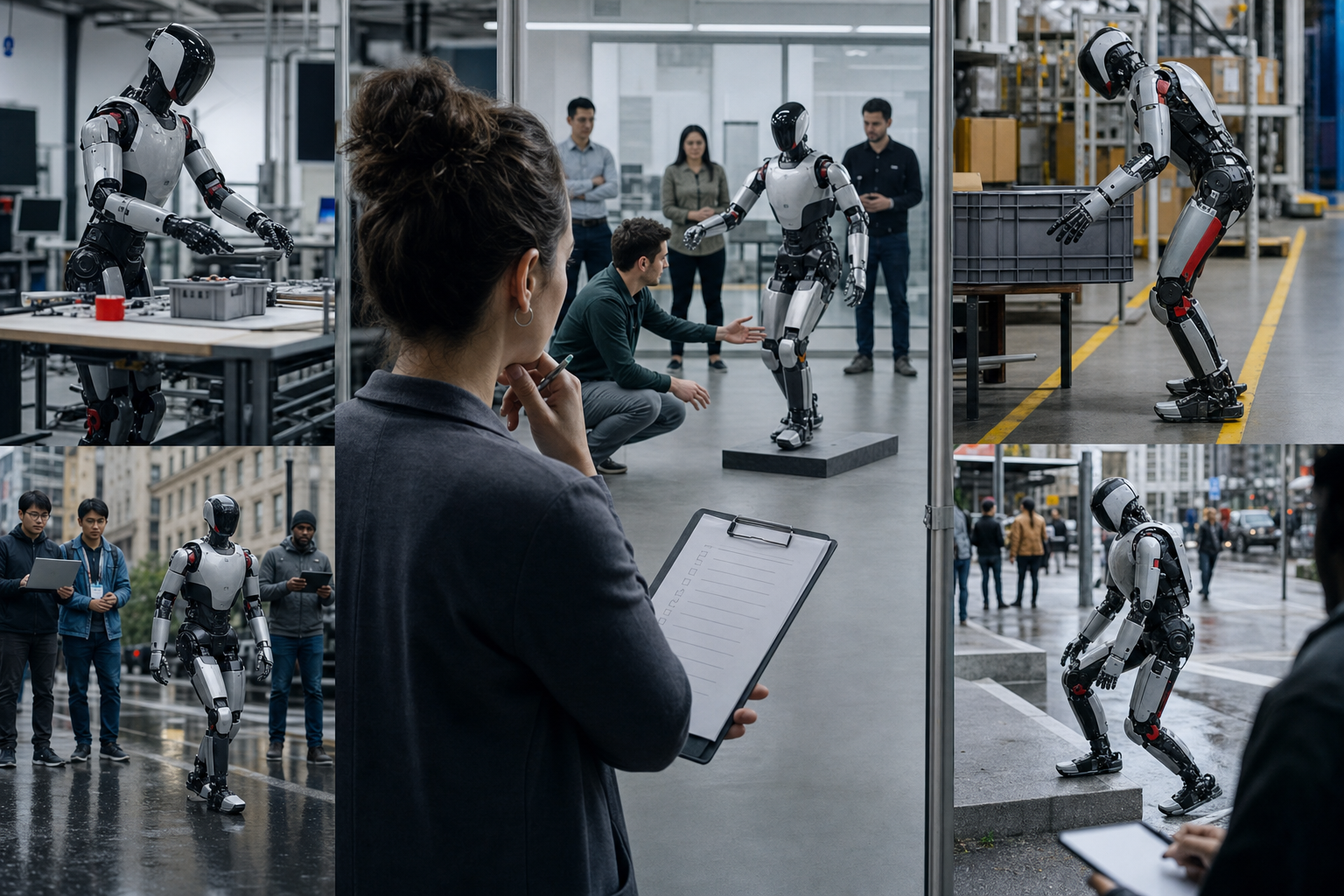
For decades, the humanoid robot was a stage prop. It waved at trade shows, climbed a few stairs for the cameras, and went back into storage. Then, over a remarkably short window, the picture changed. Major carmakers began pilot programs with humanoid workers on real production lines. Startups that did not exist five years ago started shipping bipedal machines to paying customers. The question shifted from "will this ever work" to "how fast does this scale."
At Robots.mu we call this the humanoid moment: the point where general purpose robots stopped being a research curiosity and became a race.
What actually changed
Three things converged, and none of them alone would have been enough.
First, learning replaced scripting. Classical humanoids were programmed motion by motion, which made every new task a months long engineering project. Modern systems learn from demonstration, simulation, and video. A robot that learns to pick up a cup can generalise, imperfectly but usefully, to picking up a bottle.
Second, the hardware supply chain matured. Electric actuators, harmonic drives, depth cameras, and battery packs all rode the cost curves of electric vehicles and smartphones. Components that once required custom fabrication can now be ordered from catalogues.
Third, the money arrived. Once foundation models proved that scale plus data produces capability, investors started asking the obvious question: what happens when you give that intelligence a body? Billions flowed into the answer.
Why the human shape
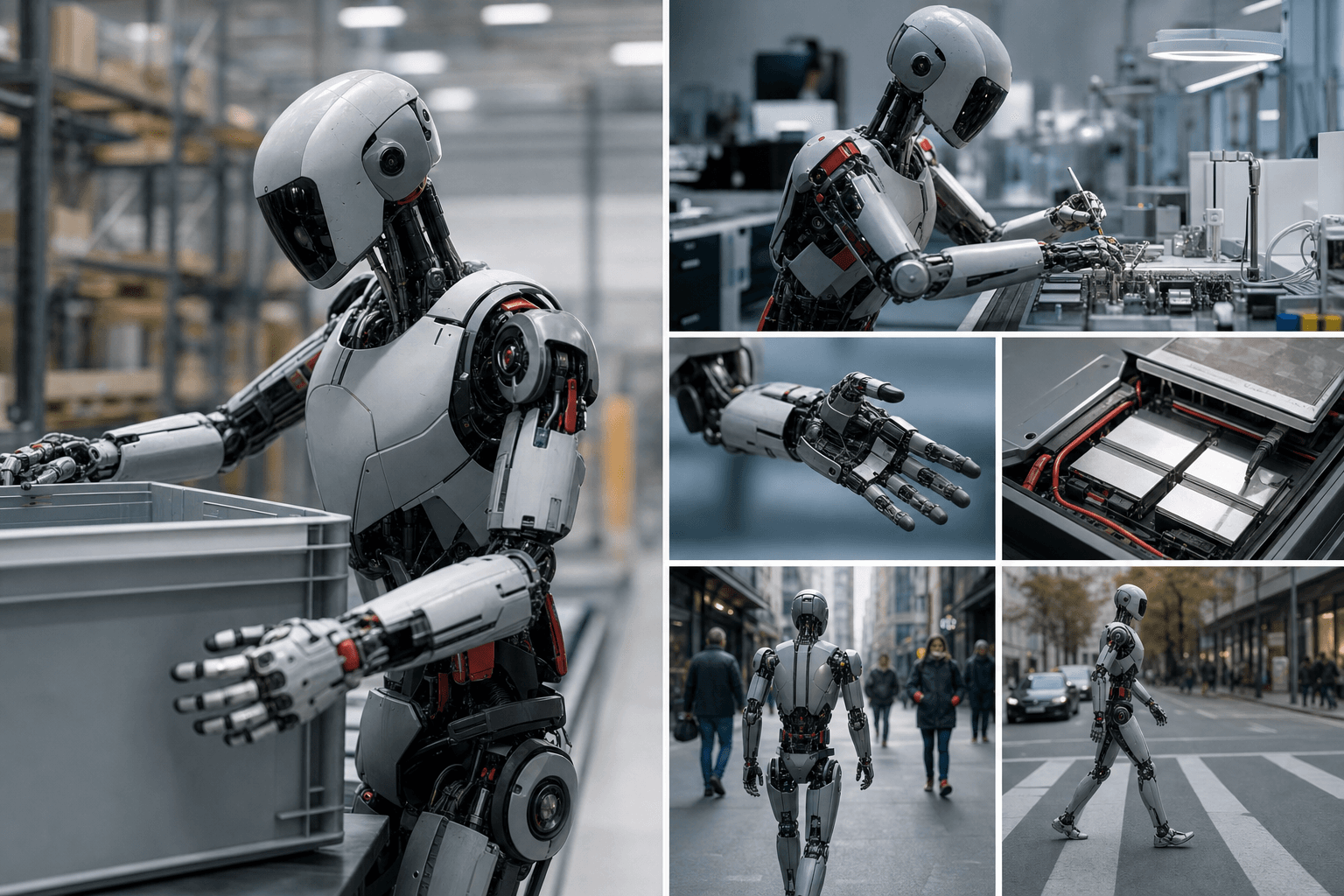
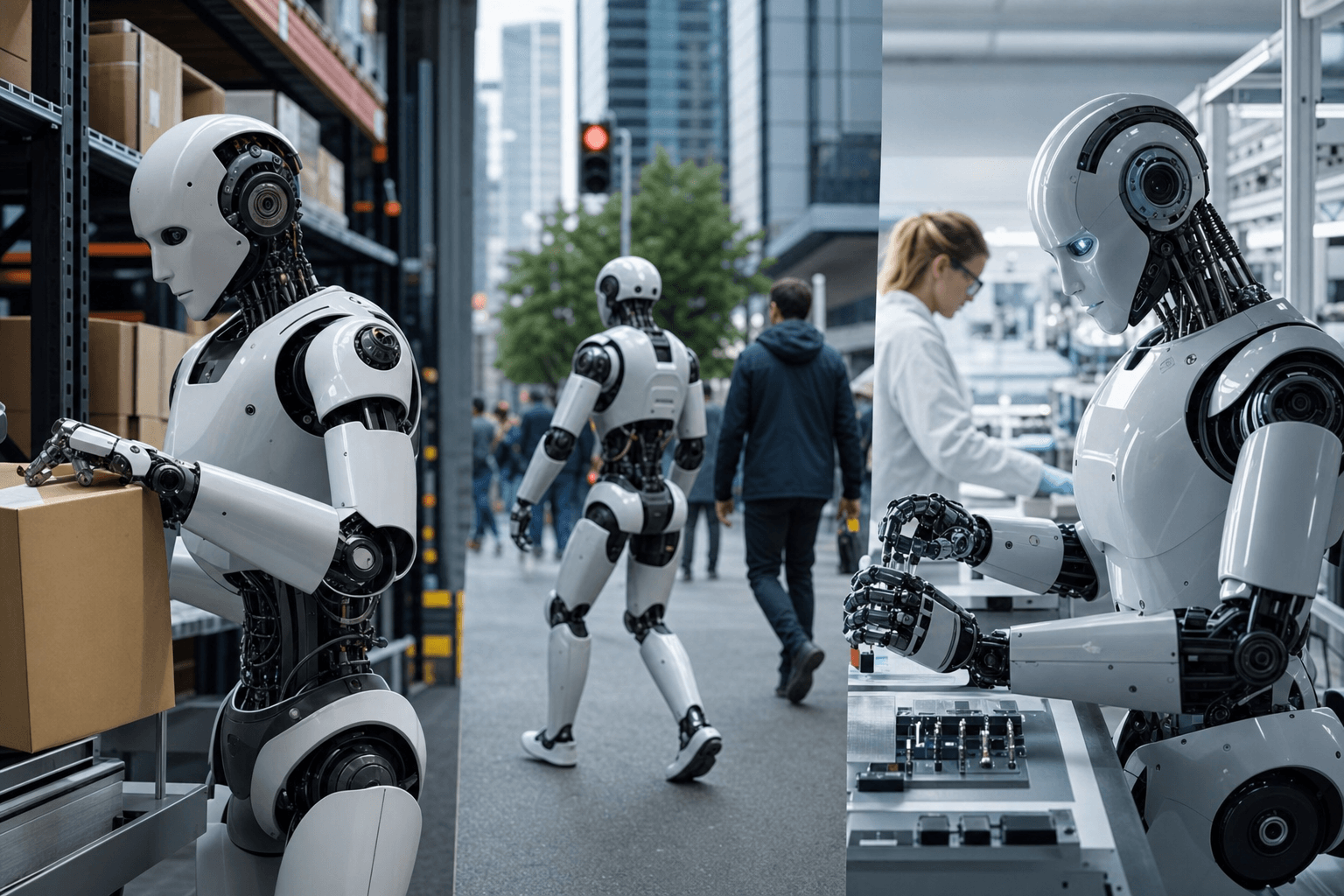
Skeptics reasonably ask why a robot needs two legs and two arms at all. Wheels are cheaper and more stable. The honest answer is that the world is the interface. Factories, warehouses, staircases, door handles, and tools were all designed for human bodies. A machine with a human form factor can, in principle, slot into any of those environments without rebuilding them.
That "in principle" is doing heavy lifting. Purpose built machines still beat humanoids at almost every single task. The humanoid bet is not about winning any one job. It is about being adequate at thousands of jobs with one platform, the way a general purpose computer beat a thousand specialised appliances.
Reading the demos honestly
If you follow robotics videos, apply a simple filter:
- Is the robot teleoperated, or acting autonomously? Many viral clips are humans in VR rigs driving the machine.
- Is the environment staged, or messy and unfamiliar?
- How many takes did the clip require, and what is the failure rate off camera?
- Is anyone actually paying to use it, or is it a marketing pilot?
Real progress is happening, but the gap between a polished demo and a robot that works an eight hour shift, five days a week, without a human minder, remains large. Reliability, not capability, is now the hard problem.
What it means from Mauritius
A small island economy will not host humanoid factories any time soon, but it will feel the effects. Mauritius imports most manufactured goods, so if humanoids eventually lower production costs in China, the United States, and Europe, prices here move too. Local sectors like hospitality, logistics, textiles, and healthcare will one day face the same automation questions now being tested abroad, with the advantage of watching others make the expensive mistakes first.
There is also an opportunity angle. Robots are ultimately software plus hardware, and the software side, from fleet dashboards to simulation and data labelling, is work that can be done from anywhere with good connectivity. Small countries that build skills early tend to punch above their weight when a platform shift lands.
The realistic timeline
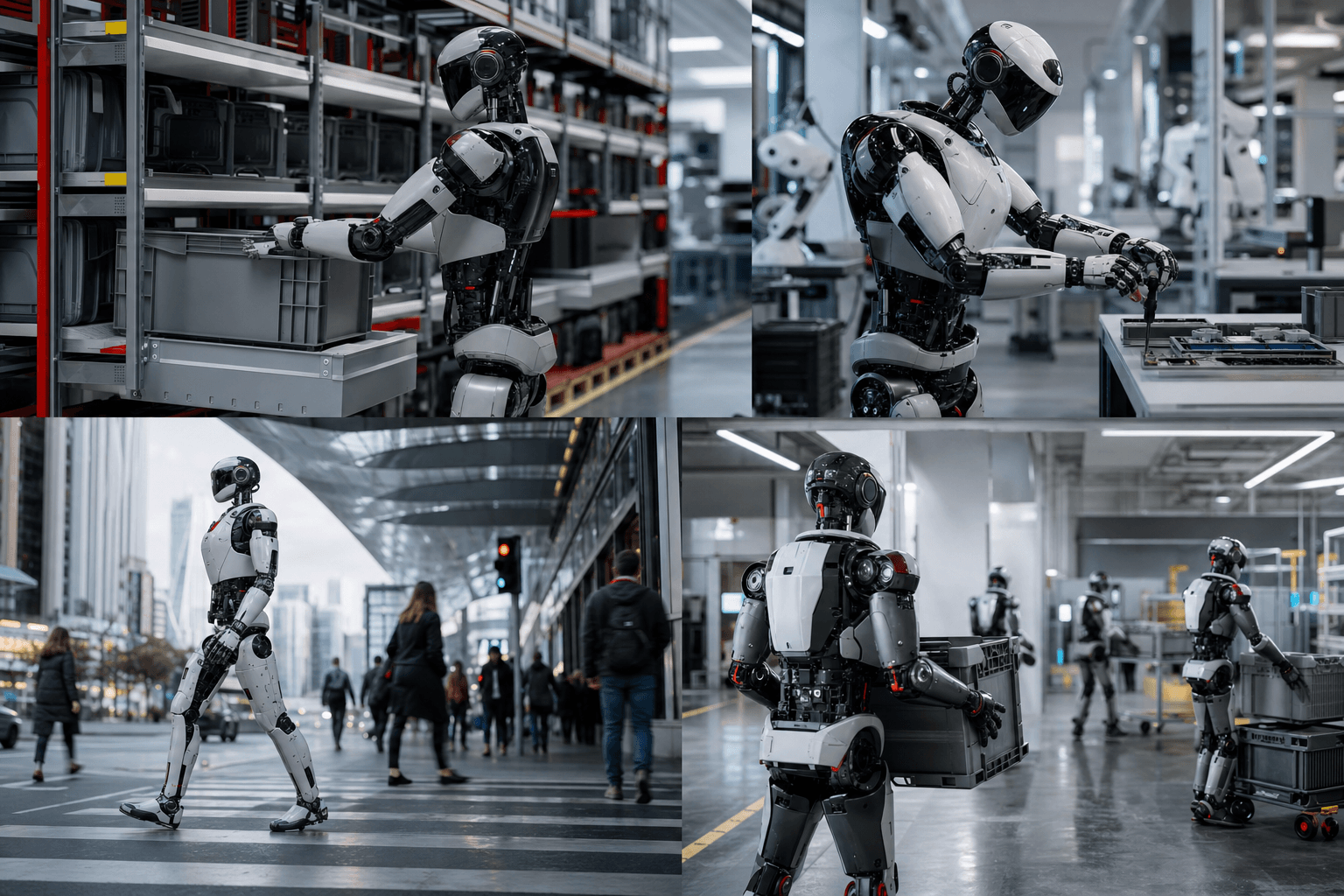
Expect the next few years to look boring from the outside: humanoids doing repetitive, structured jobs such as moving totes, tending machines, and loading trailers, in facilities that are partly reshaped around them. Homes come much later. Costs need to fall, safety cases need to mature, and the machines need thousands of hours of unglamorous uptime.
The humanoid moment is real, but it is a starting gun, not a finish line. The interesting story now is execution: who gets to reliable, affordable, and safe first. That is the race we will keep tracking.
Robotics decisions begin with a measurable task. Explore the wider Nexus AI ecosystem.